
Whiteout Survival Alliance Guide
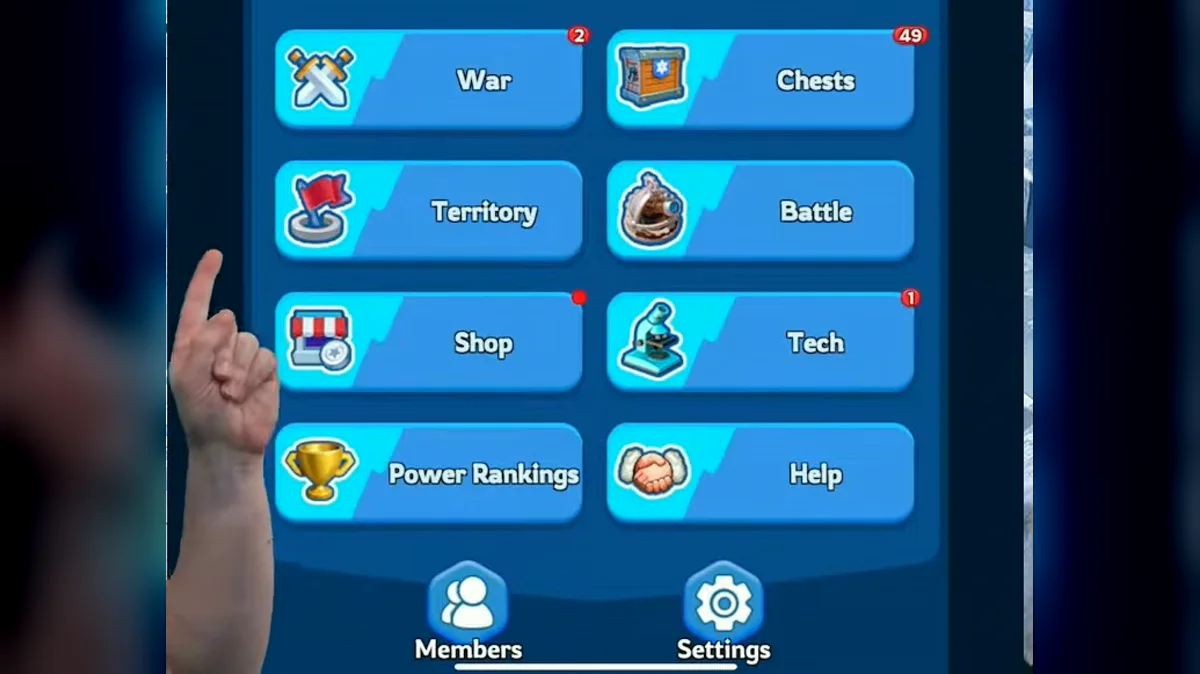
An alliance is a team of players that helps each other build faster, fights bosses in rallies and shares technology and territory. You can join one from Furnace level 7, and ranks run from R1 for new members to R5 for the leader. Alliance Help cuts construction, research and healing time, Alliance Tech gives bonuses to every member, and the alliance shop sells items for Alliance Tokens. Checked in November 2026.
Why Join an Alliance
Solo development in Whiteout Survival is noticeably slower. Alliance members help cut one another's upgrade timers, organize rallies against powerful beasts and bosses, and unlock events that solo players cannot enter. Allies can also reinforce one another to defend cities from raids.
Alliance Tech and territory add bonuses on top. Tech gives city development and battlefield bonuses to every member, and cities inside Alliance Territory receive ongoing Territory Bonuses. Help clicks take a few seconds, and when everyone helps everyone, the whole alliance moves faster.
You can join from Furnace level 7. The Embassy opens at Furnace level 8, and it is the building for Alliance Help and reinforcement requests. If your Furnace is not there yet, the Furnace guide shows what each level needs.
Alliance Ranks R1 to R5
Every member has a rank. New joins start at R1, and the leader holds R5. Ranks change what you can do for the alliance. They do not give extra stats to your own city.
| Rank | What it can do |
|---|---|
| R1 | Standard member rank given to new joins |
| R2 | Member; alliance-wide message access |
| R3 | May promote or demote R1/R2 members |
| R4 | Officers can start research, build alliance structures, kick R1-R3 and manage recruitment/event assignments |
| R5 | Leader; HQ placement, leadership transfer, renaming/disbanding and alliance identity management |
R5 is the Alliance Leader and R4 members are the managers, so most day-to-day work lands on R4. Only R4 and R5 start Alliance Tech research, which is why a healthy alliance keeps several active R4 officers.
Rank does not decide every reward. Weekly Alliance Activity Triumph Token payouts differ by rank, but most event rewards come from your own participation and placement. Do not expect a higher R number to bring a bigger prize on its own.
Alliance Tech and Donations
Alliance Tech is shared research. All members can contribute to it, and the finished bonuses apply to everyone in the alliance. The tree has 3 branches: Growth, Territory and Battle. Territory holds Tactical Expansion and Storehouse Expansion, and Rally Expansion sits in the Battle branch, so the tree covers building, gathering and fighting.
- Who starts research. Only R4 and R5 members.
- Contribution attempts. You can store up to 25 attempts, and a new one returns about every 10 minutes.
- Reward. A base contribution pays 100 Alliance Tokens.
- Recommended project. Officers can mark a technology as recommended, and contributing to it gives 20% more contribution.
Alliance Territory, HQ and Resources
The Alliance HQ is the center of your territory. Only the R5 leader can place it, and it comes in two types: Icefield HQ and Tundra HQ. The HQ cannot go on Fertile Land. Everything else grows from it. Alliance banners extend the territory, and the facilities you capture next to it give buffs to every member.
Resource nodes inside the territory give alliance resources on their own, once an hour. There are four types, Meat, Wood, Coal and Iron, and they fund alliance buildings and technology. Members cannot send resources to one another directly, so the stockpile fills only from the nodes you cover.
Territory also matters for the Bear Trap. A Hunting Trap outside Alliance Territory can be recalled after long inactivity, so keep it inside the border.
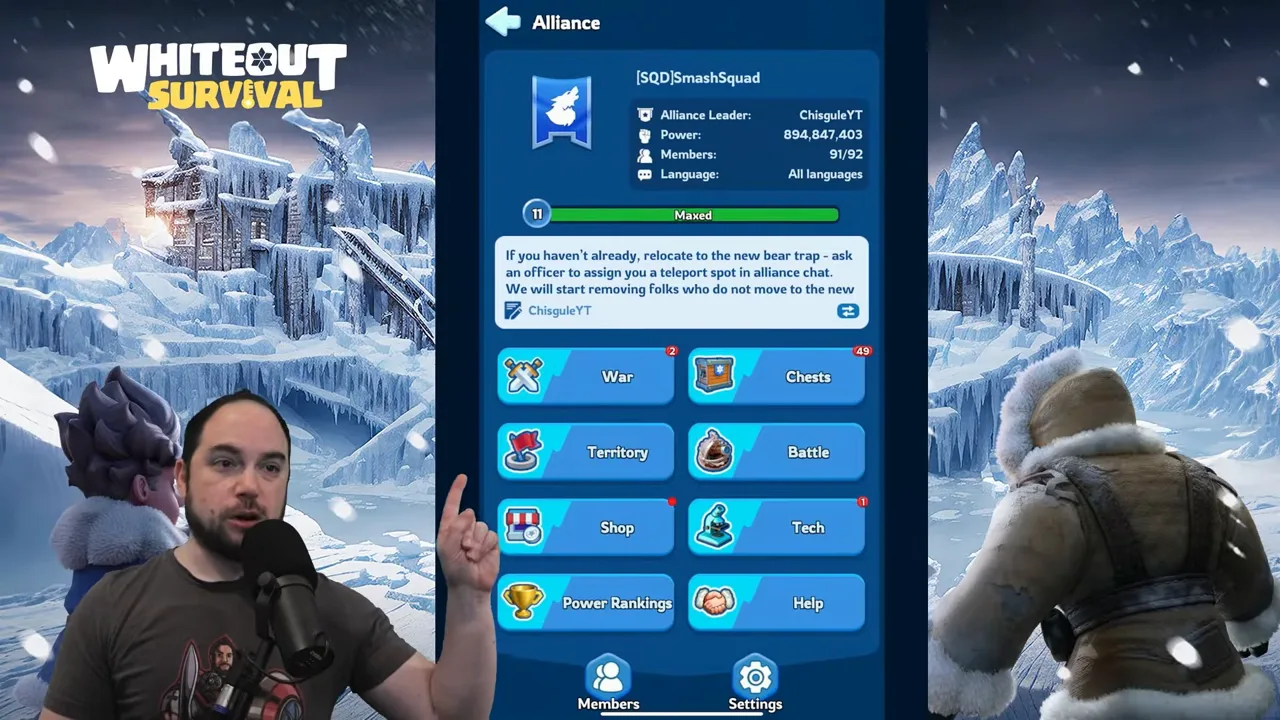
The video covers how a strong alliance works: territory and banners, alliance technology and donations, and the tools leaders use to keep members active.
Alliance Help
Alliance Help reduces construction, research and troop healing time. Giving and receiving help also earns Alliance Tokens. Ask for help as soon as you start an upgrade, and tap the help button on other members' requests. It takes seconds, and everyone speeds up together.
You get more from help when you improve two things: the Embassy and Alliance Tech. Both raise the number of helps you receive and how effective each one is. An active alliance that answers fast makes every long upgrade much shorter, including the Furnace climb described in the Furnace guide.
Alliance Shop
The shop uses Alliance Tokens. You earn them from Alliance Help, from contributing to Alliance Tech and from weekly alliance activity. The stock includes VIP XP, Chief Rename Cards, Speedups, Hero Shards, Teleporters and march enhancements. Alliance chests, which drop from Polar Terror rallies and purchases, are a separate reward.
Spend tokens on the items you actually need. Speedups help during a Furnace push, and Hero Shards help when a hero is close to its next star.
How to Choose an Active Alliance
Power ranking is a poor test. An inactive high-level alliance is less useful than an active mid-level one. Look at how quickly members answer Help requests and whether they fill rallies. An alliance that does not rally misses event rewards, and you miss them too.
- Watch the help requests for a day. If they clear in minutes, the alliance is active.
- Check rally attendance for the Bear Hunt and the Polar Terror.
- Read the activity requirements and make sure they fit your play schedule.
- Ask who the R4 officers are and how often Alliance Tech gets new research.
Alliance Events
Many of the best rewards sit behind alliance events. The Alliance Championship and Alliance Mobilization have their own guides with schedules and rewards. Two other places to start are the Bear Hunt rallies and the Fortress Battle.
Frequently Asked Questions
When can I join an alliance?
Alliances unlock at Furnace level 7, and the Embassy follows at Furnace level 8. The Embassy is the building that handles Alliance Help and reinforcement requests. Join a good alliance as early as you can, because solo development is much slower and many events are closed to players without an alliance.
What can R4 and R5 members do?
R5 is the Alliance Leader: they place the Alliance HQ, transfer leadership, rename or disband the alliance and manage its identity. R4 members are the managers. They can start Alliance Tech research, build alliance structures, remove R1 to R3 members and manage recruitment and event assignments. R3 members can promote or demote R1 and R2 members.
How do I donate to Alliance Tech?
Every member can contribute to the shared technology, but only R4 and R5 can start new research. You can contribute up to 25 times in a row, and a fresh attempt returns about every 10 minutes. Contribute to the recommended project first, because it gives 20% more contribution.
What do I get from Alliance Help?
Alliance Help reduces the time of construction, research and troop healing. Giving and receiving help also earns Alliance Tokens, which you spend in the alliance shop. Upgrading the Embassy and Alliance Tech raises the number of helps you get and how much time each one removes, so ask for help as soon as an upgrade starts.
How do I choose an active alliance?
Look at how fast members answer Help requests and how many join rallies, not at the power ranking alone. An inactive high-level alliance is less useful than an active mid-level one. Ask about activity requirements before you join, and remember that leaving before a reward period ends can cost you event rewards.
Read Next
Grow your border with the banner guide, learn what the buffs do in the facilities guide, or start from the beginner guide if you are new. Other topics are collected on the Guides page.